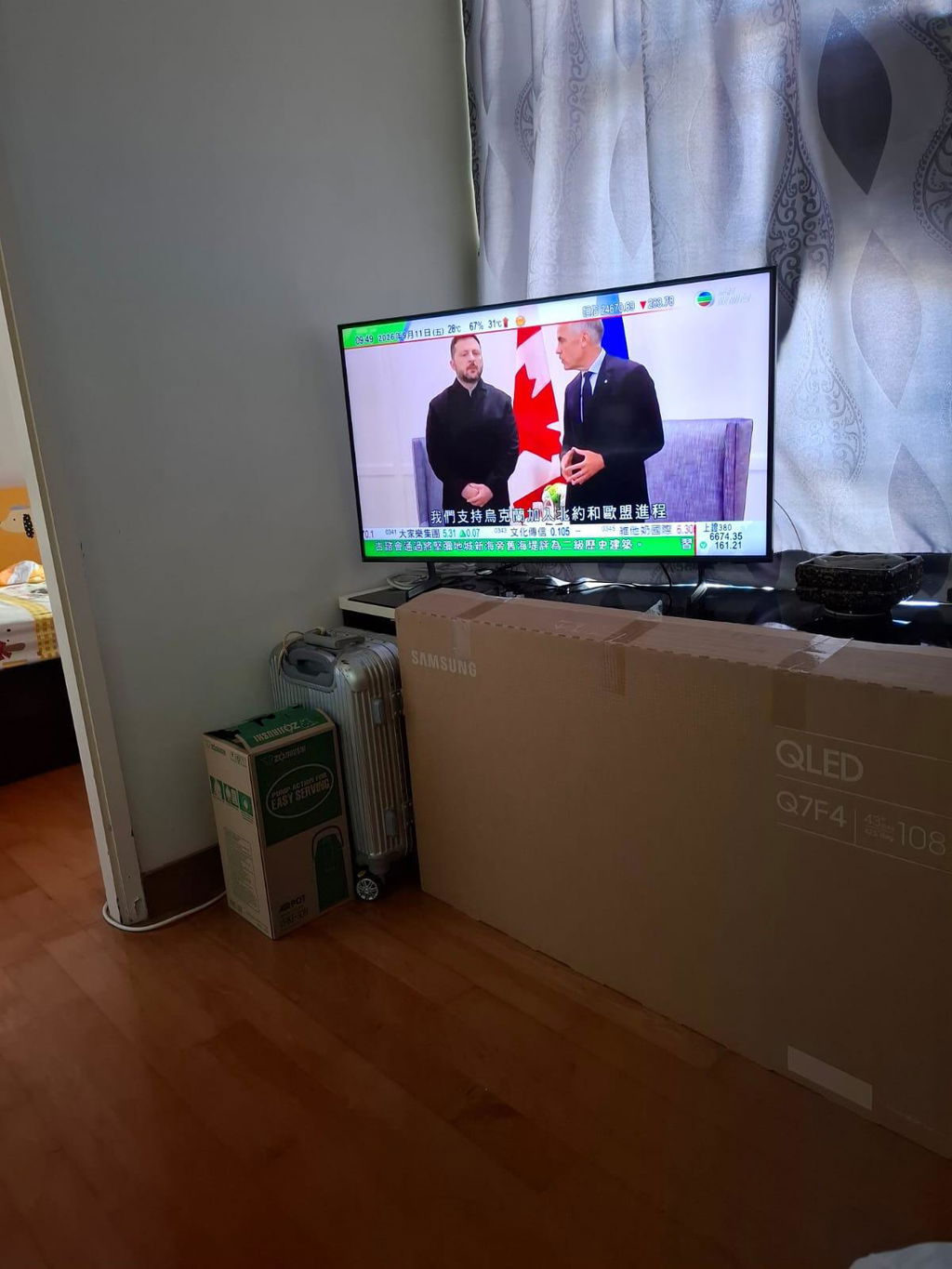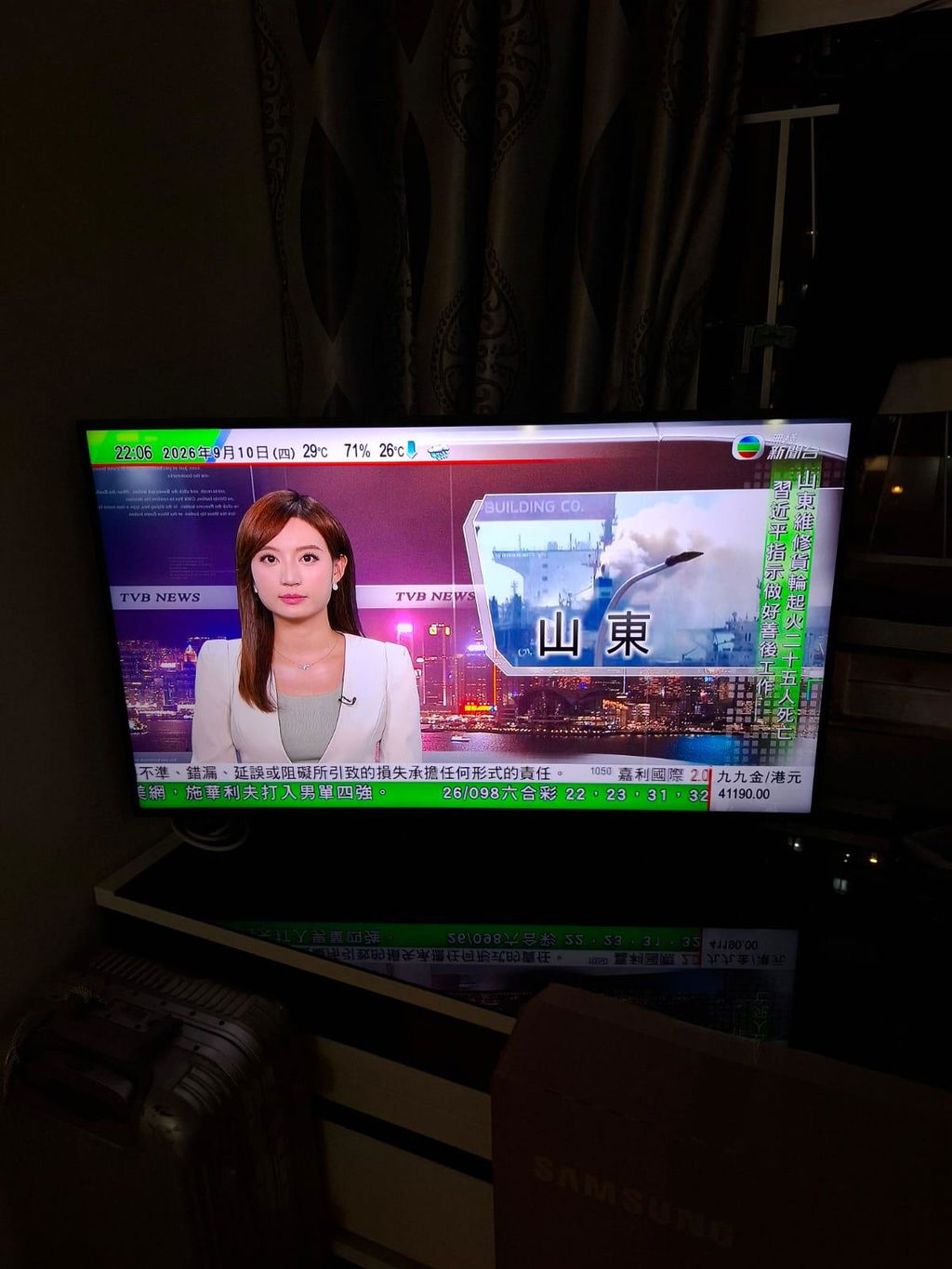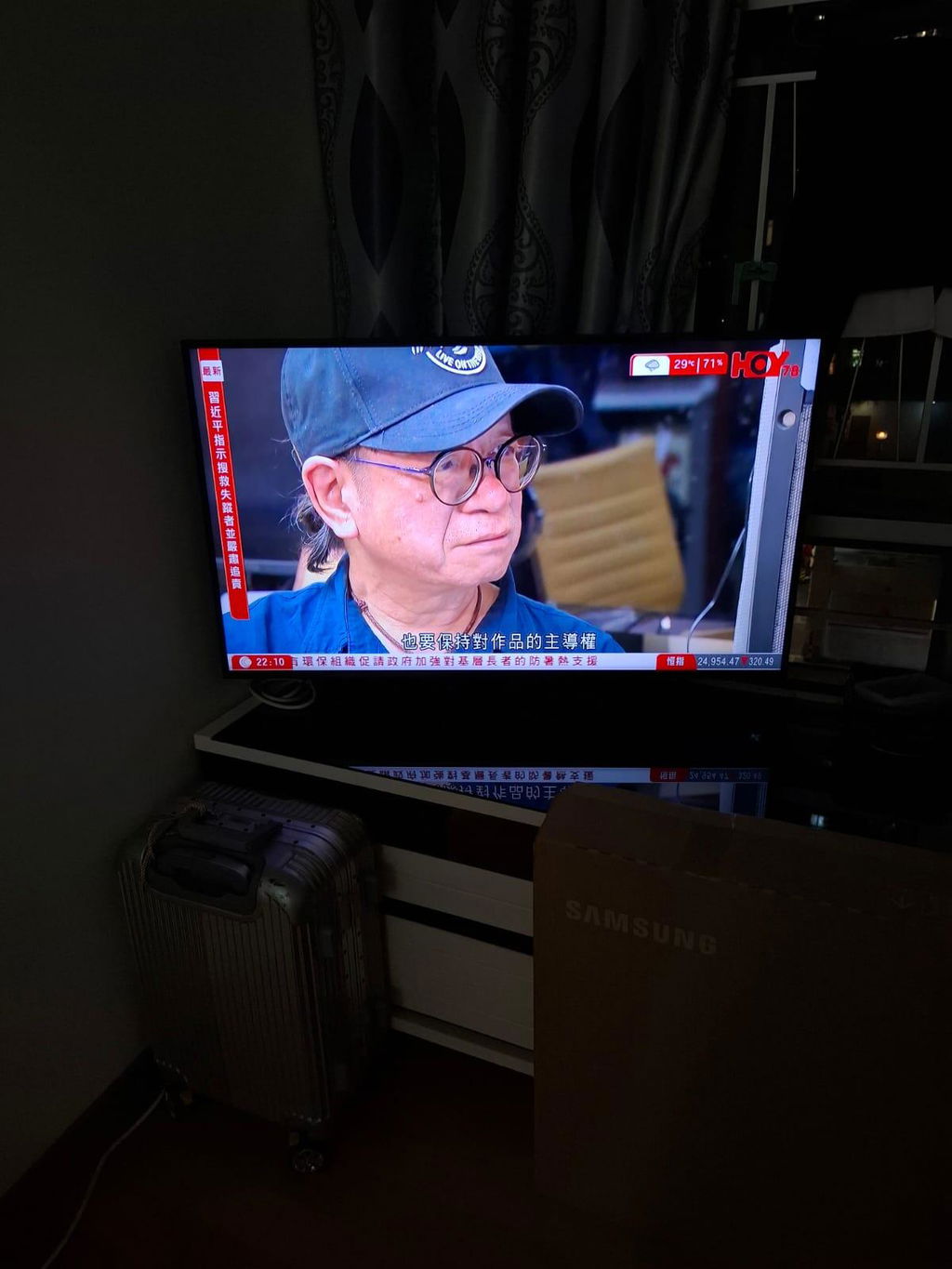

The short answer
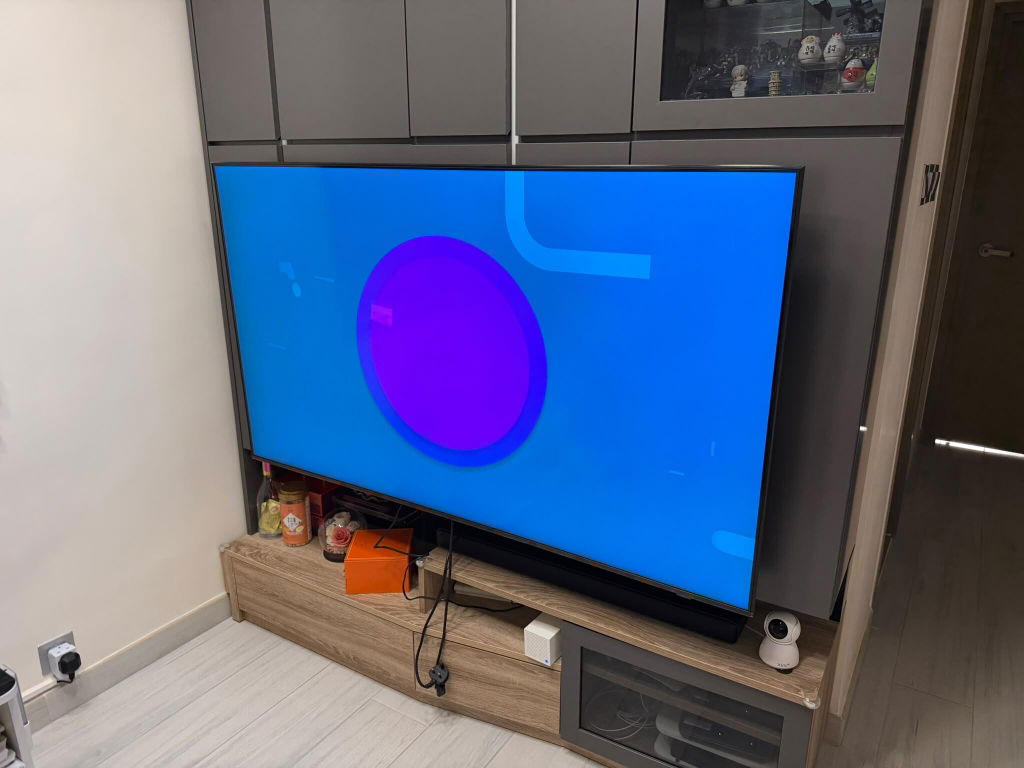
Hong Kong living rooms face the street, have large windows and get strong daylight. In that environment brightness is worth more than perfect black. For most Hong Kong living rooms Neo QLED is the safer choice — unless the set is mainly used at night with the curtains drawn. There is one exception: at 55 inches, OLED costs only HK$200 more.
Price first: 55 inches and 65 inches are two different stories
Almost every "OLED vs QLED" article says QLED is the cheaper option. That was true in 2020. On our shelves today it depends entirely on the size.
55 inches (today's prices, all in stock)
| Model | Price |
|---|---|
| Crystal UHD U8000F | HK$3,280 |
| QLED Q65D | HK$3,780 |
| Neo QLED QN70F | HK$4,980 |
| Mini LED M75H | HK$4,980 |
| Neo QLED QN85F | HK$6,280 |
| OLED S85F | HK$6,480 |
OLED is only HK$200 above the top Neo QLED. At this size, "too expensive" is no longer a reason to rule OLED out.
65 inches
| Model | Price |
|---|---|
| Crystal UHD U8000F | HK$3,980 |
| QLED Q7F | HK$4,980 |
| Neo QLED QN70F | HK$5,980 |
| Mini LED M75H | HK$6,480 |
| OLED S90F | HK$10,980 |
The gap opens to HK$5,000. Same brand, same year, ten inches larger, and the difference goes from HK$200 to HK$5,000. So "OLED or QLED" is a question whose answer changes with screen size — rarely stated, but that is the reality.
Room light is the most underrated factor here
On an OLED every pixel can switch off completely, producing true black. In a darkened room that advantage is overwhelming.
Hong Kong is not that room. Most living rooms face the street, have large windows, take strong daylight for hours, and usually look across at a glass facade. In that environment:
- You cannot actually see "perfect black". Ambient light already lifts the screen surface to grey, and the difference in black level is flattened out.
- Brightness becomes the limiting factor. Neo QLED uses a Mini LED backlight and reaches meaningfully higher peak brightness, so HDR highlights still land in daylight.
- Where the reflection falls matters more than how much there is. Whatever the panel, a set placed directly opposite a window is hard to watch by day. Decide which way the set will face before you buy.
The reverse also holds: if the set is mainly used in the evening, the room has heavy curtains, or the screen does not face the window, OLED gets to show what it can do.
Station-logo burn-in: relevant if you watch local channels
Hong Kong free-to-air channels display a station logo permanently in the corner of the picture. If a set runs local television all day as background, the same shape sits in the same place for thousands of hours.
OLED is self-emissive, and prolonged static content can cause permanent retention — burn-in. Current sets have pixel shifting, brightness limiting and periodic compensation, so the risk is far lower than it once was, but it is not zero.
Neo QLED and QLED use a backlight and will essentially not burn in permanently — though temporary image retention can still occur, and normally clears after other content plays.
So: for films, streaming and sport, OLED is fine. For a set that runs local channels or a news channel all day, or displays a fixed computer interface, Neo QLED is the safer choice.
Hong Kong flats are small, seating is close, and the sofa is usually L-shaped
Two consequences.
Viewing angle. An L-shaped sofa always puts someone off to the side. On OLED, colour accuracy and brightness barely change off-axis; Neo QLED shifts slightly in colour and dims a little. If the whole household watches together, this counts.
Close seating. Viewing distances in Hong Kong living rooms are short, so flaws in pixel structure and motion processing are easier to see. Both panel types are good enough here — this is an argument about whether a larger screen is worth it, not about OLED versus QLED.
It is not a choice of two — there are six tiers
The "OLED vs QLED" framing is itself slightly dated. What is actually on the market:
| Tier | What it is | Suits |
|---|---|---|
| Crystal UHD | Ordinary LED backlight, no quantum dot layer | Bedroom, study, small flat |
| QLED | LED backlight plus a quantum dot layer, wider colour | Budget-led living room |
| Mini LED | Smaller LEDs, more precise dimming zones | Bright rooms, contrast without the premium |
| Neo QLED | Mini LED backlight plus quantum dots | The mainstream Hong Kong living-room choice |
| QNED | LG's Mini LED and quantum dot combination | The same tier as Neo QLED |
| OLED | Every pixel emits its own light, no backlight | Dark rooms, films, seating spread wide |
For a deeper technical comparison of panel structure and local dimming, we have a separate article: Mini LED vs OLED vs QLED: which TV technology is best in 2026. This one stays on Hong Kong conditions and real prices.
Two common misconceptions
Samsung OLED does not support Dolby Vision
Many comparisons state that OLED supports Dolby Vision. That holds for LG OLED, but not for any Samsung television — from QLED through OLED to Neo QLED, Samsung uses HDR10+ and does not support Dolby Vision.
What it means in practice: by 2026 the major streaming services broadly support HDR10+, so for streaming alone the difference is small. Dolby Vision mainly affects 4K Blu-ray discs and certain playback devices. Check what you actually watch before deciding it matters.
QD-OLED is not the next generation of QLED
The Q in the name leads people to assume QD-OLED succeeds QLED. It does not. QD-OLED is OLED — a self-emissive panel with a quantum dot layer added to improve colour and brightness. It belongs to the OLED family, not the QLED one.
Three questions settle it
| Question | If yes |
|---|---|
| Will the set face a window, or be used mainly during the day? | Choose Neo QLED |
| Will local channels run all day as background? | Choose Neo QLED |
| Are you buying 55 inches, mainly for evening viewing? | Choose OLED — at this size it is only HK$200 more |
If all three are no and you are buying 65 inches or larger, the HK$5,000 saved on Neo QLED buys a size up, or a soundbar. In a Hong Kong living room, one size larger usually makes more difference than the panel technology does.
Where to start
- OLED, 55 inches: Samsung S85F OLED, HK$6,480
- Neo QLED, 55 inches: Samsung QN85F Neo QLED, HK$6,280
- Neo QLED, 65 inches, best value: Samsung QN70F Neo QLED, HK$5,980
Browse OLED televisions, Neo QLED televisions or all televisions. Prices and availability are as shown on each product page. All sets are international versions rather than local retail stock, with the warranty provided by us — details in our international-version warranty policy. Delivery, installation and wall-mounting charges are on our delivery and installation page. The Kwun Tong showroom holds stock for collection only — there is no demonstration or side-by-side viewing, which is why the three questions above are worth answering before you order.
Frequently asked questions
OLED or Neo QLED for a Hong Kong living room?
Most Hong Kong living rooms face the street, have large windows and take strong daylight. In those conditions brightness matters more than perfect black, so Neo QLED is usually the safer choice. If the set is mainly used at night, the room has heavy curtains, or the screen does not face the window, OLED gets to show its advantage.
Will OLED burn in if I watch local channels every day?
Hong Kong free-to-air channels display a station logo permanently in the corner, and prolonged static content does carry a risk on OLED. Current sets use pixel shifting and brightness limiting, so the risk is far lower than it once was, but it is not zero. If the set runs local television all day as background, Neo QLED is the safer choice.
Is OLED always much more expensive?
It depends on the size. At today's prices the 55-inch OLED S85F is HK$6,480, only HK$200 above the top Neo QLED QN85F at HK$6,280. But the 65-inch OLED S90F is HK$10,980 against HK$5,980 for the Neo QLED QN70F — a HK$5,000 gap. The same question has different answers at 55 and 65 inches.
Does Samsung OLED support Dolby Vision?
No. Samsung uses HDR10+ across its entire range, from QLED through Neo QLED to OLED, and supports no Dolby Vision. LG OLED does. In practice the major streaming services broadly support HDR10+, so for streaming the difference is small; Dolby Vision mainly affects 4K Blu-ray discs and certain playback devices.
Is QD-OLED the next generation of QLED?
No. QD-OLED belongs to the OLED family — a self-emissive panel with a quantum dot layer added to improve colour and brightness. The Q in the name causes the confusion, but QD-OLED and QLED are two different camps.
About this article
Prices quoted are the Elechid website prices on the date of writing; the product page is authoritative. HDR format support follows each manufacturer's official specification.